Scleral lens cost and insurance coverage, in New Albany, Ohio.
The cost of scleral lenses depends on your diagnosis, your insurance plan, and the benefits available through that plan. COVE offers a clear self-pay option and verifies applicable vision benefits before your consultation.
This page explains our pricing structure, common coverage scenarios, and the steps we take to check your benefits. It applies to medically necessary fits and elective fits for conditions such as keratoconus, severe dry eye, and irregular corneas.
What your fitting fee covers.
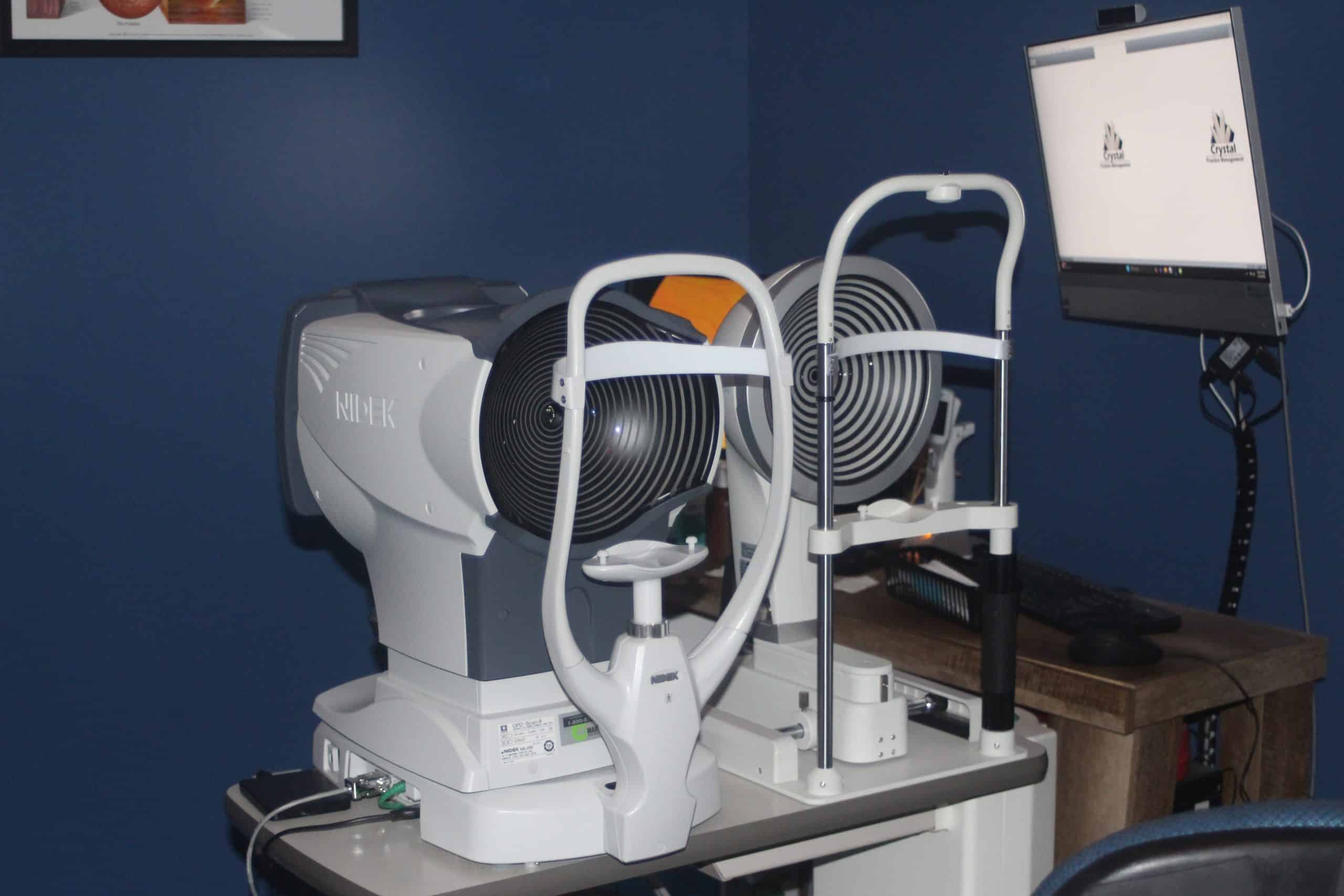
A scleral lens fitting at COVE includes several steps. Your fitting fee covers corneal topography with the Oculus Keratograph 5M, anterior segment OCT imaging, lens design, the dispense visit, and revisions during the fitting period.
You do not pay a separate fitting fee for each revision. This structure gives us room to adjust the design as we evaluate the fit.
Lens costs are billed separately from the professional fitting fee. This keeps the fitting fee consistent whether your case needs one revision or four. We verify what we can in advance and confirm the details with you at the consultation.
Three pricing scenarios.
Our COVE Plus Sclerals program offers one flat self-pay price for elective and medically necessary fits. The program includes the exam, fitting, and first year of lenses for both eyes.
Applicable vision benefits may reduce your out-of-pocket cost. The three scenarios below explain how pricing and coverage usually work. We verify what we can in advance and confirm together at the consultation.
Keratoconus, severe dry eye, and irregular corneas
Before benefits are applied, the professional fitting and the lenses are billed separately. The total varies with the needs of the case.
Many VSP and EyeMed plans include a Medically Necessary Contact Lens (MNCL) benefit. It commonly applies to keratoconus and similar qualifying conditions. Coverage still depends on your plan and its diagnosis criteria. Call us with your insurance card. We verify what we can in advance and confirm together at the consultation.
Other vision coverage or no MNCL benefit
VSP and EyeMed benefits may apply when your plan includes medically necessary contact lens coverage. We check the benefit, its current availability, and the information the plan provides before your visit.
Without applicable vision coverage, the fitting and the lenses are billed separately. Our COVE Plus Sclerals program provides one flat self-pay price that includes the exam, fitting, and first year of lenses for both eyes. Eligible out-of-pocket expenses may be paid with HSA or FSA funds.
High prescriptions and elective quality-of-vision fits
Some patients choose scleral lenses without a qualifying medical diagnosis. Reasons may include a high prescription, occupational vision demands, or a preference for scleral lens optics and comfort.
One flat self-pay price through our COVE Plus Sclerals program covers the exam, fitting, and first year of lenses for both eyes. Your regular vision plan may provide a contact lens fitting allowance, copay benefit, or percentage discount for an elective fit. Benefits vary by plan, so we check your coverage. Eligible out-of-pocket expenses may be paid with HSA or FSA funds.
How medical necessity works.
A contact lens fit may qualify as medically necessary when a condition prevents conventional lenses or glasses from providing functional vision. Qualification depends on your diagnosis and the criteria in your specific plan.
Conditions commonly associated with medically necessary scleral fits at COVE include the following.
Keratoconus
Keratoconus is the most common qualifying diagnosis for scleral lenses at COVE. It causes progressive thinning of the cornea, and glasses and standard contacts may be unable to correct the resulting irregular vision. Many VSP and EyeMed plans activate the MNCL benefit for keratoconus, and coverage depends on the terms and diagnosis criteria of your plan.
Severe dry eye and ocular surface disease
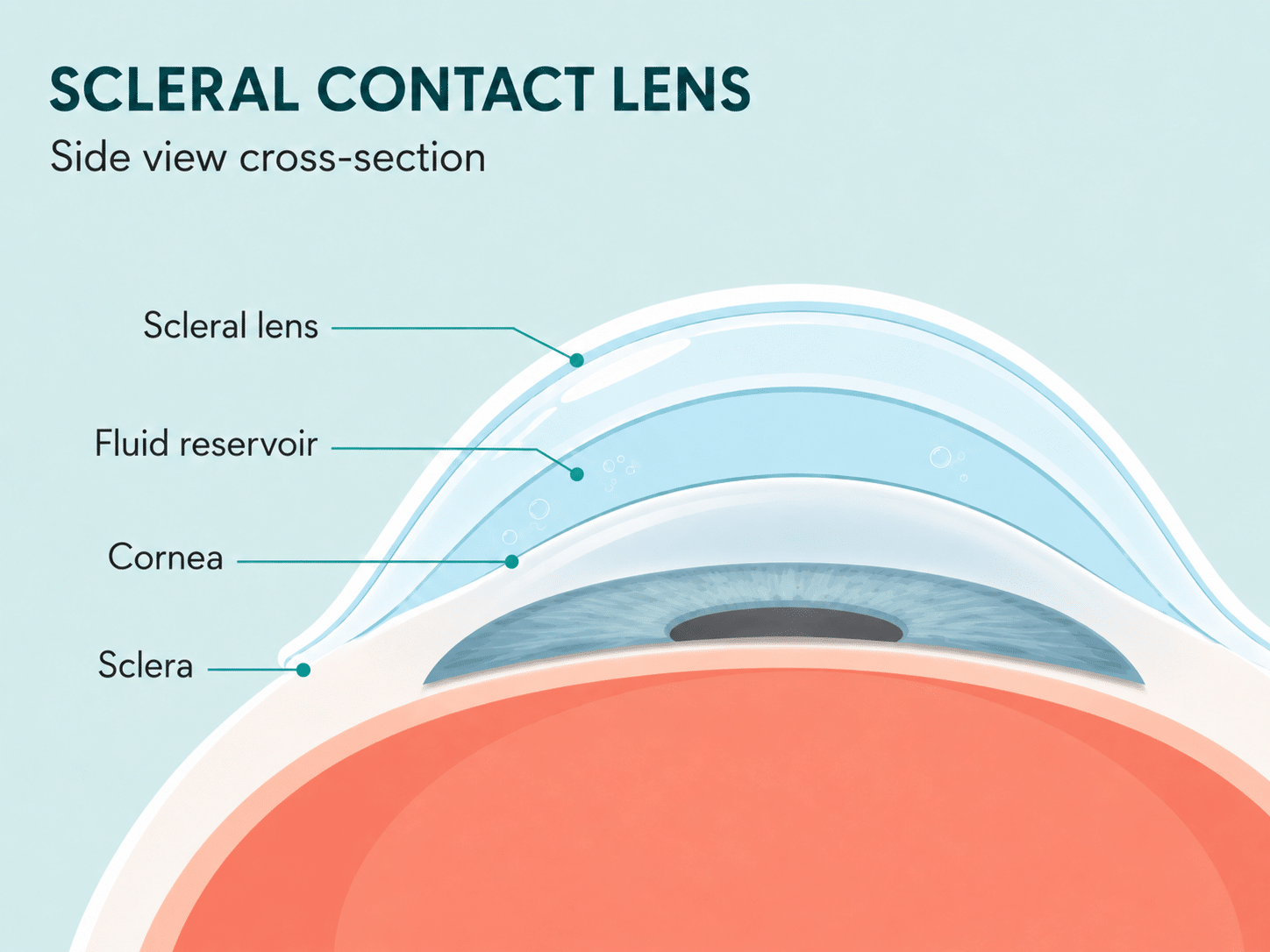
Severe dry eye may prevent a patient from maintaining conventional lens wear. Ocular surface disease may also occur with Sjögren's syndrome, graft-versus-host disease, or similar conditions. A scleral lens holds a fluid-filled reservoir against the cornea throughout the day, and that reservoir functions as a continuous lubricating layer.
Post-surgical and irregular corneas
LASIK, radial keratotomy (RK), corneal transplant, or trauma may leave the cornea with an irregular surface. Conventional lenses may be unable to correct the resulting irregular astigmatism, and scleral lenses often can provide correction in these cases. A post-surgical irregular cornea qualifies as medically necessary under many plans, and your specific coverage depends on the plan's criteria.
At COVE, medically necessary scleral lenses are processed through a VSP or EyeMed vision plan. The applicable benefit is the Medically Necessary Contact Lens benefit.
We contact your vision plan before the appointment and report the available information. We verify what we can in advance and confirm together at the consultation. Final qualification and patient responsibility depend on the diagnosis and plan terms reviewed at that visit.
We report what we find and give you the clearest estimate we can before your consultation. Qualification and final responsibility are confirmed together at the appointment.
How we verify your coverage.
Call us with your vision insurance information before your consultation. Please provide your carrier, plan name, and member ID. You may also bring your insurance card to the appointment.
We check your plan's MNCL benefit, remaining allowance, and available copay or coinsurance information. Your diagnosis and the plan's criteria determine whether your case qualifies. We review those details with you at the consultation.
We verify your benefits in advance
We check your vision plan, MNCL benefit, remaining allowance, and available copay information before your consultation.
Revisions are included in one fitting fee
Your fitting fee includes revisions during the fitting period. You do not pay a new fitting fee for each revision.
HSA and FSA eligible
Fitting fees and lens costs are eligible expenses for HSA and FSA funds. This applies to medically necessary and elective fits.
-
01You contact us with your vision insurance information. A phone call works best. Please share your carrier, plan name, and member ID. You may also bring your card to the consultation.
-
02We check your plan's MNCL benefit. Plan designs vary, and some plans do not include this benefit. We also check whether the benefit has already been used during the current year.
-
03We review the vision benefits that may apply to your specialty contact lenses. At COVE, medically necessary specialty contact lenses are processed through the applicable VSP or EyeMed MNCL benefit.
-
04We share the available information before your appointment. Benefit verification can establish whether the benefit exists and remains available. Whether your specific case qualifies depends on the diagnosis criteria reviewed at the consultation. We verify what we can in advance and confirm together at the consultation.
HSA and FSA eligibility.
Scleral lens fitting fees and lens costs are eligible expenses under Health Savings Accounts (HSA) and Flexible Spending Accounts (FSA). This applies to medically necessary and elective fits.
You may use available HSA or FSA funds for eligible out-of-pocket fitting and lens expenses. Bring your HSA or FSA card to your appointment. We process the card like any other form of payment.
FSA plans may have a use-it-or-lose-it deadline. Review your plan's rules and available balance when planning your consultation and your lens order.
Annual replacement costs.
We recommend replacing scleral lenses annually. Earlier replacement may be appropriate if your prescription or corneal shape changes. The lens material may last longer when those factors remain stable, and annual replacement is still the schedule we plan around. Deposits and surface wear build gradually, and timely replacement supports clear vision and eye health.
We may repeat corneal topography before ordering lenses if your prescription or corneal shape has changed significantly. VSP and EyeMed MNCL benefits often renew each year. The renewed benefit may apply when your qualifying diagnosis remains on file.
Initial fitting
The initial service includes the full fitting and a pair of lenses. Applicable insurance benefits are applied at this stage. An active MNCL benefit typically covers the fitting and the lenses, subject to plan terms and qualification. Corneal topography and anterior segment OCT imaging are included.
Annual follow-up
Follow-up visits confirm the lens fit and monitor the underlying cornea. Replacement lenses are ordered annually, or sooner when a clinical change makes earlier replacement appropriate. Your MNCL benefit may renew each year.
Replacement lens
Replacement orders cover the lenses. We recommend annual replacement. We may repeat corneal topography if your prescription or corneal shape has changed. The full fitting fee does not repeat unless the case has changed significantly.
Why a careful fit matters.
Many scleral lens patients have spent years trying glasses or soft contacts. They may have changed prescriptions, tried several lens designs, or stopped wearing contacts because vision or comfort remained inadequate.
The fitting fee supports a detailed process built around your cornea. It includes custom imaging, lens design, and revisions during the fitting period. This work may help patients with keratoconus, severe dry eye, or another irregular corneal condition achieve functional vision and comfortable lens wear.
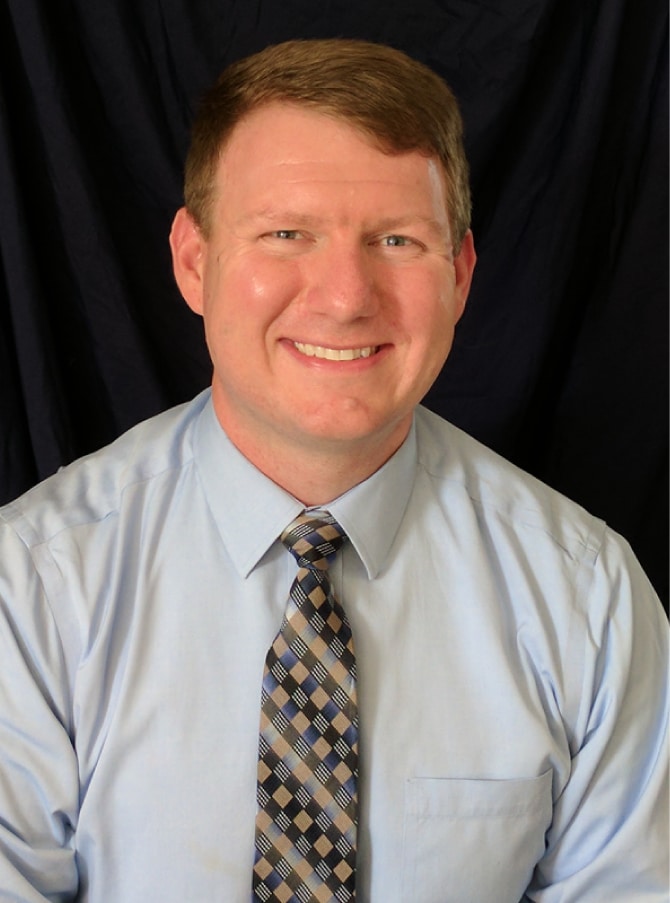
Some patients with complex corneal disease are also weighing future treatment options, including corneal transplant surgery. Dr. Karres can explain the role scleral lenses may have in your individual care plan.
Dr. Karres has years of clinical experience fitting specialty contact lenses at COVE: scleral, gas-permeable, multifocal, and orthokeratology fits. Today he personally designs each patient's WAVE ScleraLens, which is clinical design work.
Dr. Karres also held a separate position as a research optometrist at The Ohio State University College of Optometry. That research studied contact lens solutions, scleral lens filling solution, and atropine.
Corneal topography. Anterior segment OCT. Lens design. The dispense visit. The full scheduled follow-up process. Revisions during the fitting period.
You do not pay a new fitting fee for each revision. Each revision gives Dr. Karres another opportunity to refine the lens design for your cornea.
Frequently asked questions.
Q.01 Do scleral lenses go through medical or vision insurance? +
Q.02 What is the MNCL benefit, and will I qualify? +
Q.03 Can I use my medical insurance for scleral lenses? +
Q.04 Are scleral lenses FSA and HSA eligible? +
Q.05 Does the fitting fee cover lens revisions? +
Q.06 How often will I need to replace my lenses? +
Schedule a scleral lens consultation.
Call us to begin your benefits verification and schedule a consultation. We check your vision plan's available MNCL information before the visit. We verify what we can in advance and confirm together at the consultation.
Related reading: scleral contact lens overview · scleral lenses for keratoconus · scleral lenses for severe dry eye · sclerals for irregular corneas · scleral lenses for high prescriptions · hard-to-fit contacts in New Albany · specialty contact lens overview · COVE Plus Sclerals flat-price program