
What to expect at your eye exam.
Coming in for your first eye exam at COVE? Here's a walk-through of how a visit works: what to bring, what we test, how we handle your insurance, and how long it takes. Nothing surprising, no pressure.
If you'd rather just pick a time, you can schedule now or call us at (614) 933-0575.

The four questions we get most.
What should I bring?
Photo ID, your insurance card(s), both medical and vision if you have both, your current glasses, and a list of any medications.
How long does the exam take?
About 45 minutes for a routine eye exam. Some patients leave with new glasses the same day if the prescription is straightforward. Add a few extra minutes for the in-house lab to finish them.
Can I drive home afterward?
For most patients, yes, and you'll leave clear-sighted. We use wide-field retinal photographs in place of pupil dilation for the routine eye-health check, so most people don't get dilated at all. If your doctor does recommend dilation that day, we'll send you home with disposable sunglasses and driving is still fine.
First time at COVE?
We'll hand you a short intake form on a laminated sheet at the front desk. Fill it out, hand it back, we scan it in. No paper.
Insurance we accept.
We accept VSP and EyeMed vision plans and work with most major medical plans for eye-health visits.
What to expect, start to finish.
When you come in, we handle check-in and verify your insurance, run the exam, and walk you through what we found and your options for glasses, contacts, or treatment. We aim to leave you knowing what's going on with your eyes, what your choices are, and what each one costs. If something doesn't make sense, ask.
Front desk and intake.
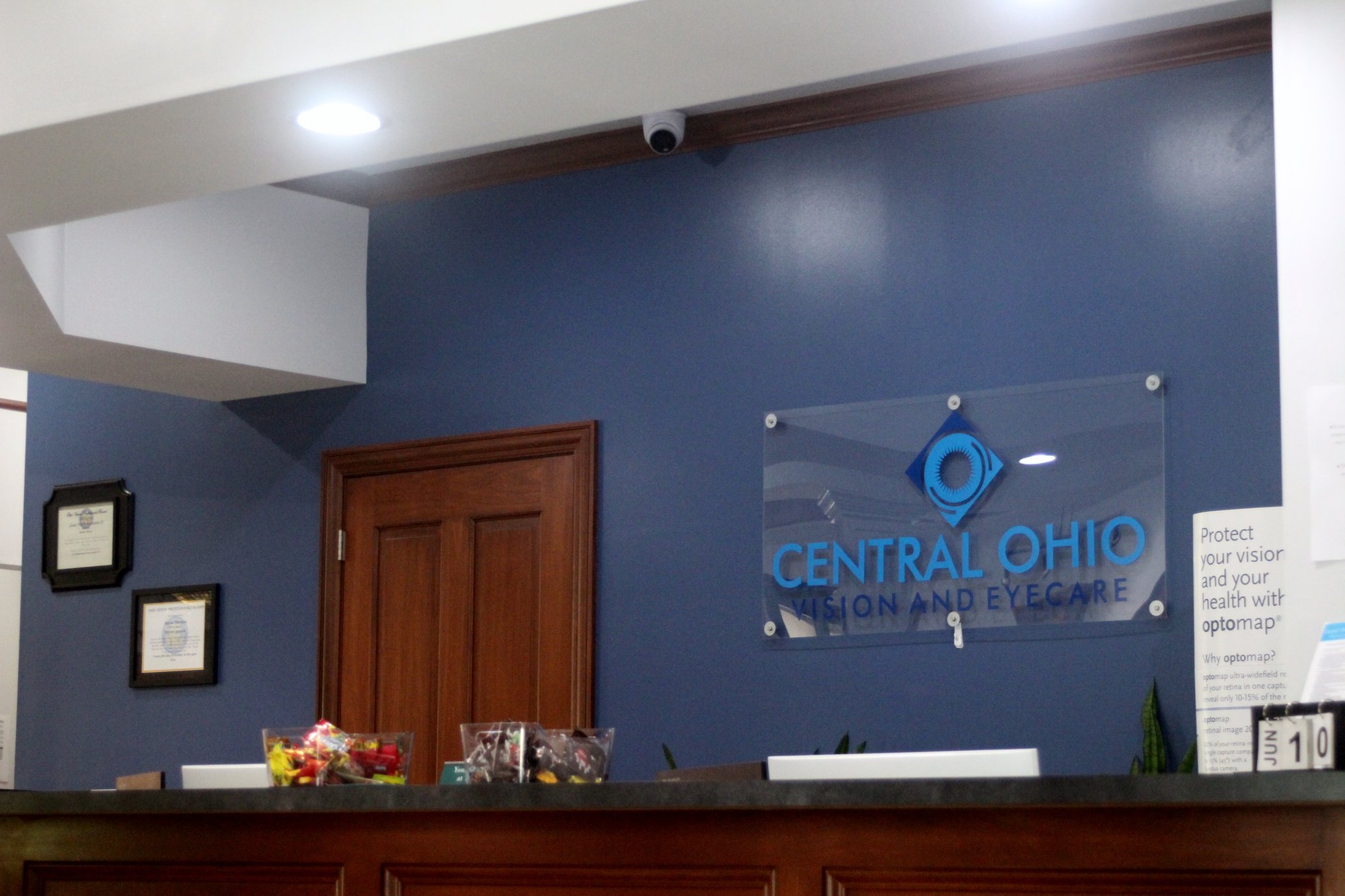
You'll be greeted at the front desk. Bring your photo ID and any insurance cards, both medical and vision if you have both, so we can pull every benefit you're entitled to.
We'll hand you a short intake form on a laminated sheet. Fill it out, hand it back, we scan it in. No paper wasted. The form has two signatures: one for HIPAA (how we handle your records) and one for testing consent.
Our standard exam includes retinal photographs and a visual field screening. The retinal photo is a wide-field image of the back of the eye. It screens for retinal disease, diabetic changes, and macular degeneration, and gives your doctor a baseline to compare against in future years. For most patients it replaces pupil dilation entirely. The visual field test screens for things like glaucoma, optic nerve disease, or, rarely but importantly, neurological issues that can affect side vision.
Quick screening, no air puff.
A technician will take you back to a small room with a few machines. There are some beeps and some quick screening tests, but no air-puff tonometer. Promise.
After pre-testing, you'll move to the exam room. The tech will go over the reason for your visit with you, then brief your doctor before they come in.
You'll read some letters on the chart so we can measure how well your eyes are seeing right now. Guesses are okay. Then comes the refraction (the "one or two?" test), which finds your prescription. No wrong answers.

The exam and refraction, finding your prescription.
Your doctor measures your prescription using a Marco TRS-6100 digital refractor. Instead of the old manual phoropter with dials, the lens comparisons happen on a screen: "which is clearer, one or two?" but faster and more precise.
Your doctor will check the health of the front of your eyes: dryness, infections, scratches, anything that could affect comfort or vision.
We use an iCare tonometer. A tiny disposable probe lightly touches the cornea for a fraction of a second and measures the pressure inside the eye. No numbing drops, no air blast, no contact-lens-like device pressed against your eye. Most patients don't feel it.
The wide-field retinal photographs your technician took during pre-testing do the work that dilation used to. The image lets your doctor screen for retinal disease, diabetic changes, macular degeneration, and other things without dilating you. Most patients leave clear-sighted and ready to drive.
If something on the photos prompts a closer look, or if you have specific risk factors or symptoms, your doctor may still recommend dilation that day. We'll explain why and send you home with disposable sunglasses if so.
What we found, and your options.
Once the exam wraps up, your doctor will walk you through what they found: your eye-health screening, your current prescription and whether it changed, and what your options are. This is also a good time to ask the questions that always come up: laser vision correction, dry eye, cataracts, contact-lens options, whether your child needs myopia management. If specialty care is needed, we have surgeons in the area we trust and refer to.
If you wear contacts, you may leave with a trial pair of new lenses. We typically schedule a one-week follow-up to make sure the new lenses are comfortable before you commit to a full supply.
Glasses, follow-ups, and out the door.
The whole visit usually takes about 45 minutes from when you walked in. If your prescription changed, our opticians will walk you through your glasses options: frames, lens material, coatings.
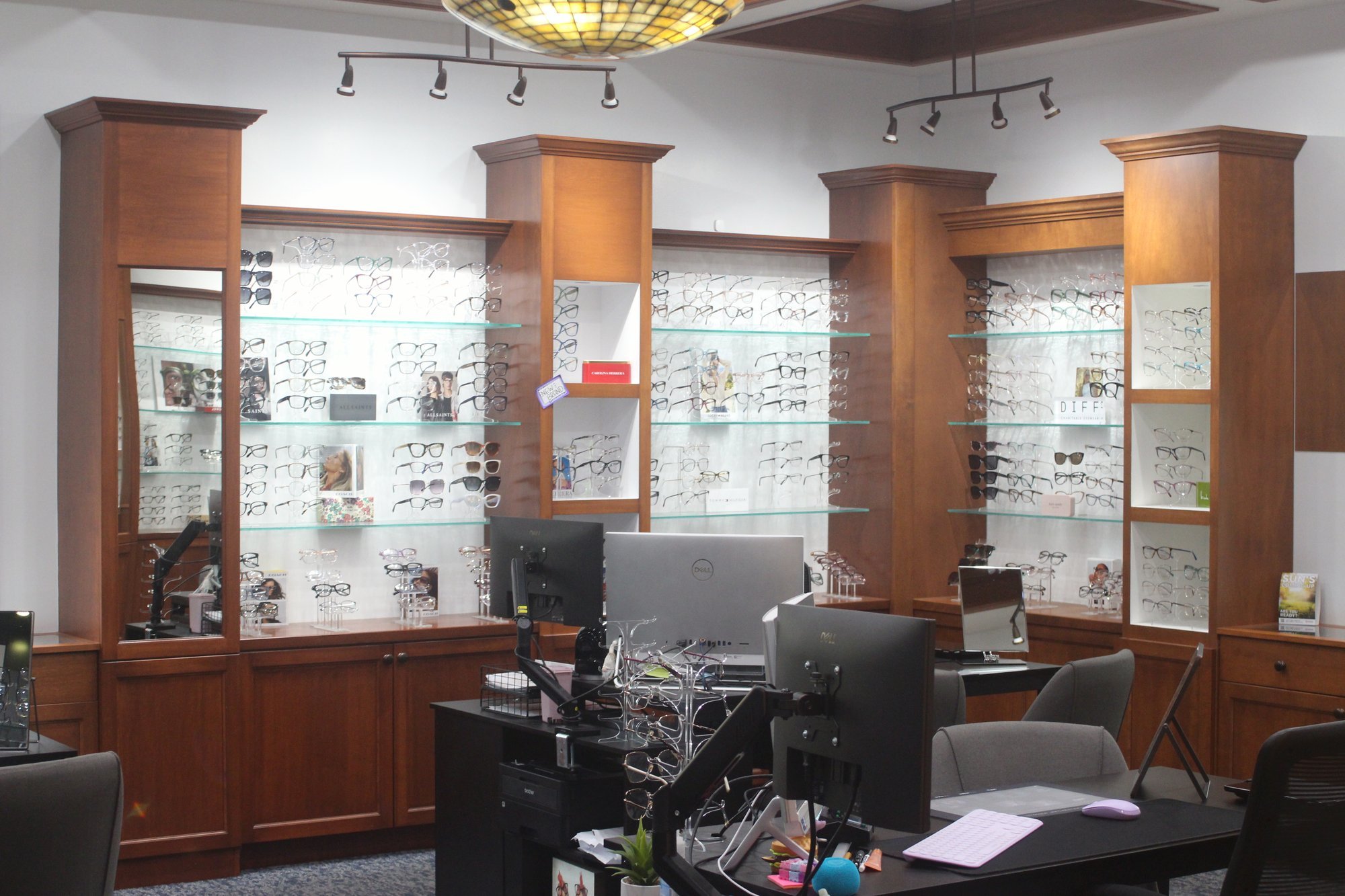
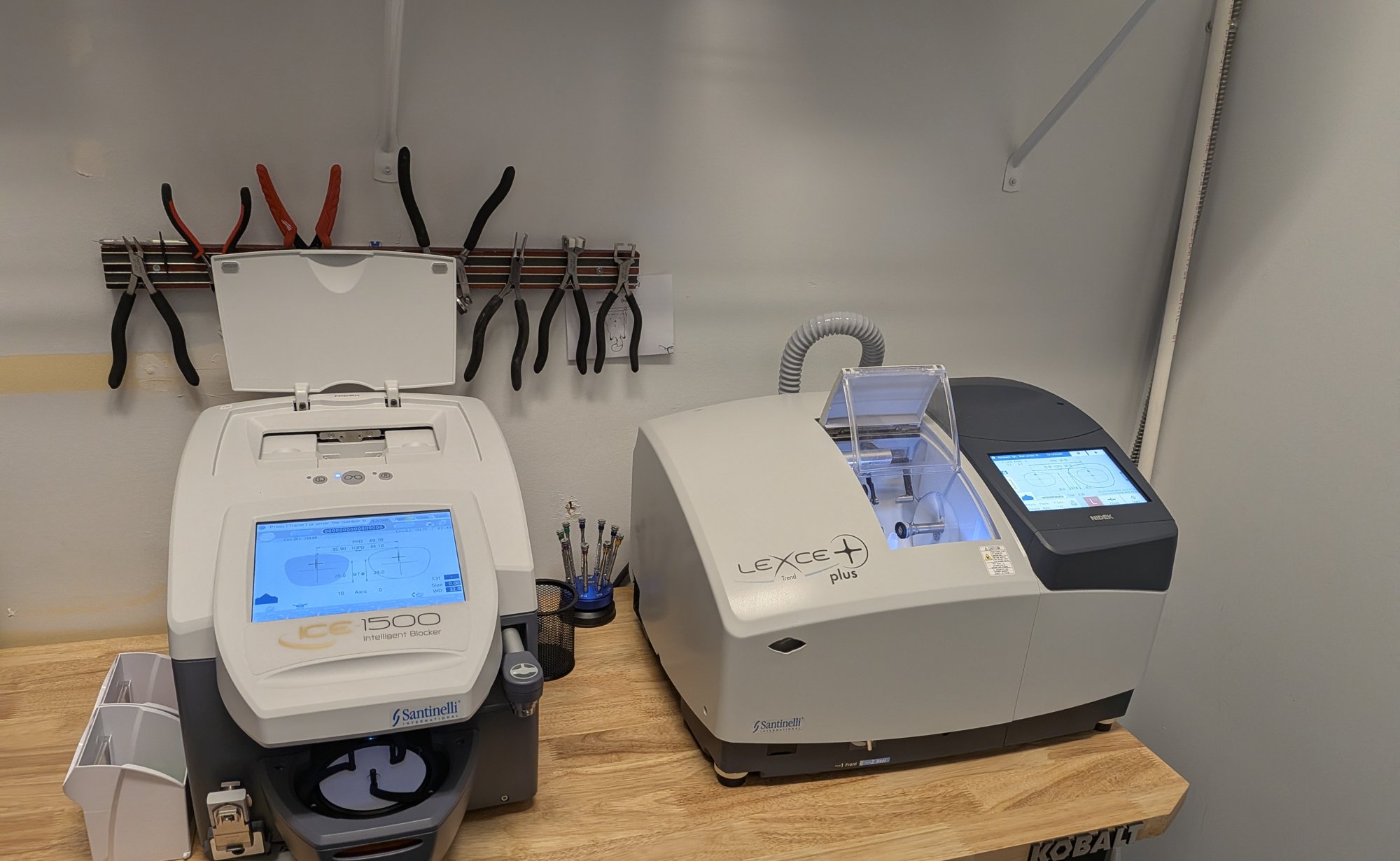
If your prescription is straightforward and the lenses are in stock, we can often finish your glasses in our in-house lab while you're still here. You may need to wait an extra few minutes, but you can walk out with new glasses the same day. More complex prescriptions take longer.
If you need follow-ups (specialty contact fitting, a medical work-up, anything else) we schedule those before you leave. We'll go over what your insurance covered, what's owed, and hand you an itemized receipt and a copy of your prescription so it's yours to keep.
You'll leave knowing what's going on with your eyes, what your choices are, and what each one costs.
Nothing surprising, no pressure. If something doesn't make sense, ask.
Schedule your exam.
Schedule online or call (614) 933-0575. New patients are always welcome at our New Albany office.
Related: meet the team · contact and office hours · COVE Plus flat pricing for uninsured patients
Who is this visit for?
This is what decides which doctor you see.
Have you been seen at COVE before?
How old is your child?
Has your child been seen at COVE before?
Do you wear contact lenses, or would you like to?