Eye exams in New Albany, done right.
A routine eye exam should do two things: get your prescription right, and catch anything happening inside your eyes before it becomes a problem. At COVE, both halves get real attention — not a five-minute glance at a chart and a rushed refraction. Drs. Karres, Keller, and Dennis handle every exam themselves, using equipment built to be more accurate and more comfortable than the standard office setup.
What's actually in a COVE eye exam.
Four parts, the same for every patient, run on digital equipment built to be more accurate and more comfortable than the standard office setup.
No air puff.
Eye pressure gets checked with an iCare tonometer — a small, disposable probe that touches the cornea for a fraction of a second. No air blast, no numbing drops, no flinching.
A digital refraction, not a guessing game.
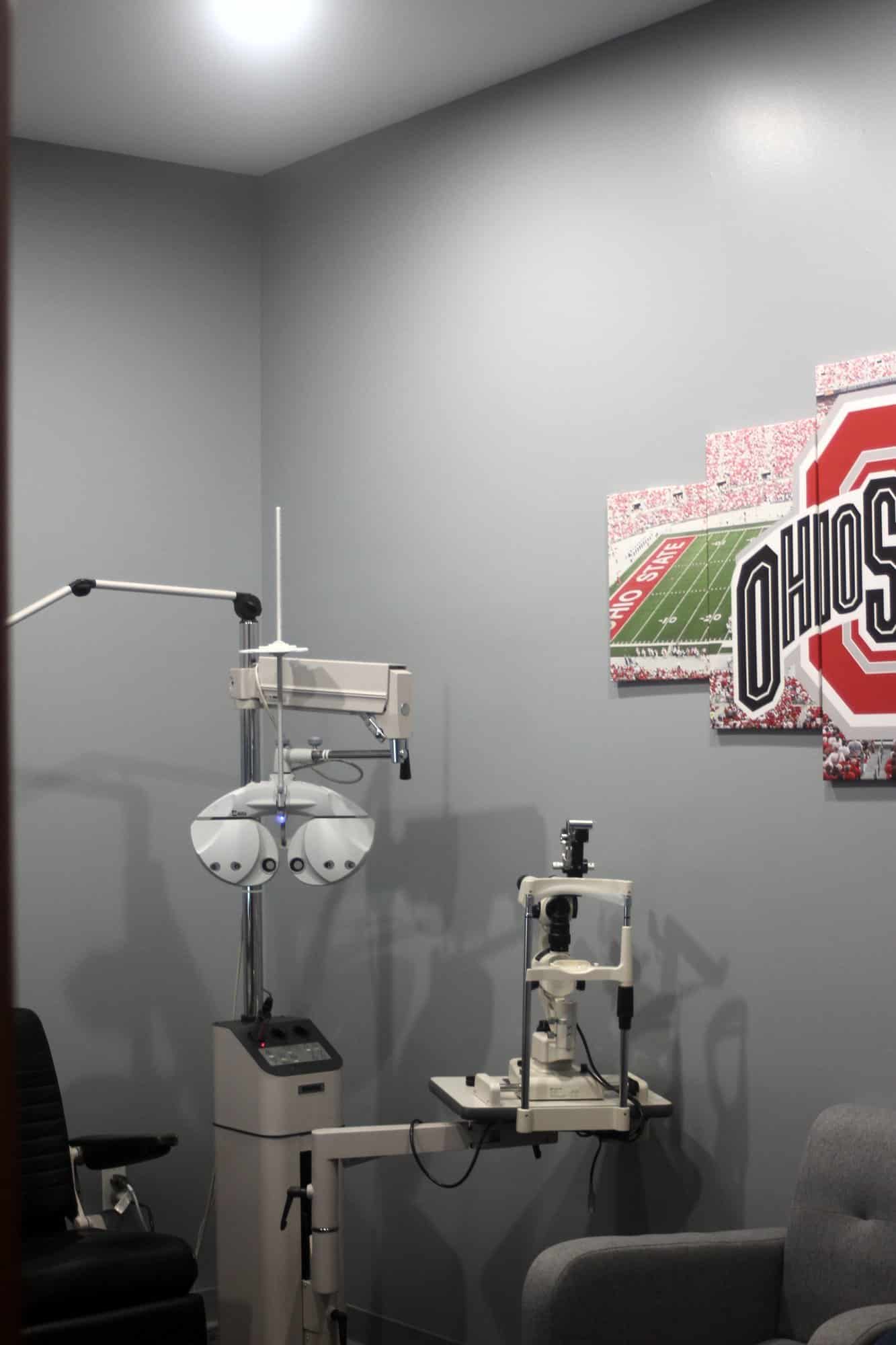
The “which is better, one or two?” part of the exam runs on a Marco TRS-6100 digital refractor. Lens comparisons show up on a screen with finer steps than a manual phoropter, so your prescription converges faster and lands more precisely.
A look inside your eye, no drops needed for the imaging itself.
Wide-field retinal photography lets the doctor view deep into the back of your eye and screen for early signs of diabetic eye disease, macular degeneration, and other retinal issues — without dilating drops for most routine visits. (Dilation still happens if something on the photo needs a closer look, or your history calls for it.) Most patients drive themselves home and get back to their day without blurry, light-sensitive vision.
A prescription that accounts for your actual life.
Screen-heavy job, sports, driving at night, a new baby you're holding six inches from your face — tell the doctor what your eyes actually do all day. The exam and the final Rx get built around that, not a generic default.
Who this exam is for.
This is COVE's general and family eye exam — the one for anyone who needs their vision checked and their eye health screened, whether that's your annual visit, your first exam in a few years, or a checkup because something's felt off.
If your child needs their first exam or an exam built specifically for how kids' eyes develop, our pediatric eye exams page walks through what's different about a kids' visit. If you're coming in specifically to get fit for contacts, the contact lens exam covers what that adds on top of a routine exam. And if you're managing diabetes, diabetic eye exams covers the additional screening that condition calls for.
Insurance and what a visit costs.
COVE takes VSP and EyeMed for vision insurance, and Anthem, Aetna, Cigna, Medicare, UnitedHealthcare, and Medical Mutual for medical plans. Plans and networks vary a lot, so we verify your benefits in advance and confirm what's covered with you before anything happens at your visit — no surprise bills, no guessing.
If you'd rather skip the insurance math entirely, ask about COVE Plus, our flat-rate self-pay option for exams and glasses.
What to expect, start to finish.
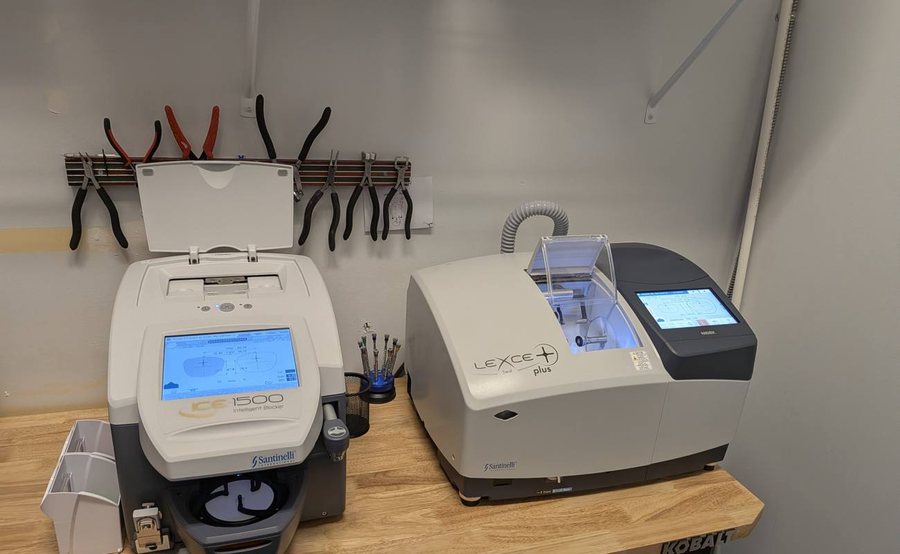
Most routine exams run about 45 minutes: check-in, pre-testing (the tonometry and retinal photos), the exam itself with the doctor, a review of what they found, and checkout. If your prescription is straightforward, our in-house lab can often finish single-vision glasses the same day — no waiting a week for something simple. For more involved lenses (progressives, specialty coatings, high prescriptions), the lab timeline runs longer; the team will tell you what to expect for your specific Rx before you leave.
For a fuller walkthrough of your first visit — what to bring, what the paperwork looks like — see our patient center.
Three doctors, one local practice.
Drs. Karres, Keller, and Dennis all see routine exam patients, and any of the three can handle your visit — you're getting the same practice and the same records either way.

The right exam catches problems before they affect your vision, not after.
Diabetic eye disease and macular degeneration often progress with no early symptoms. Regular exams, matched to your risk factors, are how we catch changes while there's still something we can do about them.
Frequently asked questions.
Is an eye checkup the same as an eye exam? And is a school or BMV vision test enough?
People call it a lot of things: an eye checkup, an eye examination, a vision test, an eyeglass exam. At COVE they all mean the same visit, and it's a comprehensive eye exam.
A screening is different. The vision test at school, at the pediatrician's office, or at the BMV checks one thing: how clearly you read a chart at distance. That catches some nearsightedness and misses nearly everything else. It doesn't measure how your eyes work together, it doesn't check your eye pressure, and it never looks inside your eye. Plenty of people pass a screening and still have an uncorrected prescription, early glaucoma, or diabetic changes in the retina.
If the last time anyone looked at your eyes was a chart on a wall, you haven't had an eye exam yet.
Do I need to get my eyes dilated?
Usually not. Wide-field retinal photography lets us view inside your eye with no drops needed for the imaging itself, so most routine exams skip dilation. If the photos show something that needs a closer look, or your eye history calls for it, the doctor will dilate you at that visit: the exception, not the rule.
How often should I get an eye exam?
Most adults with no known eye conditions do well with an exam every one to two years; if you wear contacts, have a family history of eye disease, or have a condition like diabetes, your doctor may recommend more often. Your doctor will tell you what makes sense for you at your visit.
What should I bring to my exam?
A photo ID, your insurance card(s) (medical and vision, if you have both), your current glasses, and a list of any medications you're taking.
Can I still drive myself home?
In most cases, yes. Because the retinal imaging itself needs no drops, most routine exams end with your vision exactly as it was when you walked in. If your visit does call for dilating drops, we'll tell you before we use them so you can plan.
When can I get my glasses?
Often the same day. Our lab is in the building, and we cut single-vision lenses on site: for many patients that means walking out with finished glasses the day of your exam. Some lenses (certain progressives, specialty materials, and unusual prescriptions) are custom made at outside specialty labs and take longer. Our opticians will give you a real turnaround estimate when you pick your frames, not a guess.
Do you see kids for routine exams, or just adults?
Both — but if your child needs their first exam or you want to know what's different about a kids' visit, our pediatric exam page is built specifically around that.
Will I see the same doctor every time?
Drs. Karres, Keller, and Dennis all see routine exam patients, and any of the three can handle your visit. If you'd like to request a specific doctor for continuity, mention it when you book.
Schedule your exam.
Ready to get in? We'll verify your insurance ahead of time so there's nothing to figure out when you get here.
Who is this visit for?
This is what decides which doctor you see.
Have you been seen at COVE before?
How old is your child?
Has your child been seen at COVE before?
Do you wear contact lenses, or would you like to?