
Blog
6 Signs Your Contacts Will Never Feel Right

Six signs your current contacts will never feel right.
If you have decided you are just “not a contacts person,” it may be the lens, not your eyes. Here is how to tell, and what actually comes next.
Somewhere at home you have a barely used box of contacts and a conclusion you reached somewhere along the way: your eyes are too dry, too sensitive, too “difficult,” and glasses are just easier. Sometimes that is the right call. But often the real problem is that you were fit with a standard, off-the-shelf lens that was never going to work for your particular eyes, and a different kind of lens can make a meaningful difference.
Standard soft contacts come in a limited range of shapes and sizes. Eyes do not. If yours fall outside that range, trying another brand of the same kind of lens rarely helps. Below are six signs you may be in that situation, and what is worth trying instead. We see patients for this across New Albany and Central Ohio.
The six signs.
1. They are comfortable in the morning and miserable by afternoon
If you carry rewetting drops everywhere, or the lenses come out by mid-afternoon because you cannot stand them another hour, the lens may not be matching your tear film or your eye’s surface. A lens designed for your eye, or one that vaults the cornea entirely, can often improve the afternoon crash.
2. Your vision is “almost” clear but never crisp
If your contacts get you close but leave everything slightly soft, especially at night, the lens may not be correcting the full shape of your eye. This is common with astigmatism and with corneas that are not perfectly regular.
3. You have been told you have astigmatism, keratoconus, or an irregular cornea
These are different situations, and they matter differently. Regular astigmatism is often corrected well with toric soft lenses. Keratoconus and other irregular corneas are another story: they often need a lens that creates its own smooth optical surface, which is what rigid and scleral lenses are designed to do.
If keratoconus is part of your picture, your next read is scleral lenses for keratoconus →
4. You have had LASIK or a corneal issue and contacts feel different now
Refractive surgery, a transplant, or an injury can change the shape of the cornea. Some of these eyes still do fine in conventional lenses; others see and feel dramatically better in a specialty design made for that new shape. Which one you are is exactly what an evaluation sorts out.
If surgery or injury changed your cornea, your next read is scleral lenses for irregular and post-surgical corneas →
5. Your eyes are genuinely dry and lenses make it worse
For real ocular-surface dryness, a properly fitted scleral lens can help many people, because it holds a reservoir of fluid over the cornea while it is worn rather than sitting on a dry surface. Dryness can have several causes, so sometimes it takes more than a lens change, and we will tell you if so.
If dryness is your main complaint, your next read is scleral lenses for dry eye →
6. You have “tried everything” and a doctor said you are hard to fit
“Hard to fit” usually means hard to fit with standard lenses. It does not have to mean impossible: often it means standard lenses were the wrong tool, and an evaluation can tell whether a different design is realistic for your eyes. It is often the point at which another doctor refers a patient to us.
If you have heard those words, your next read is hard-to-fit contacts in New Albany →
“I’m not a contacts person” is frequently just “I’ve only been offered one kind of contact.” There are several kinds, and they are very different.
What to try next.
Not another box of the same lens, for a start. If a few of these signs sound familiar, the step that changes things is a specialty contact lens evaluation, where we map the surface of your eye and fit to its actual shape. The main options:

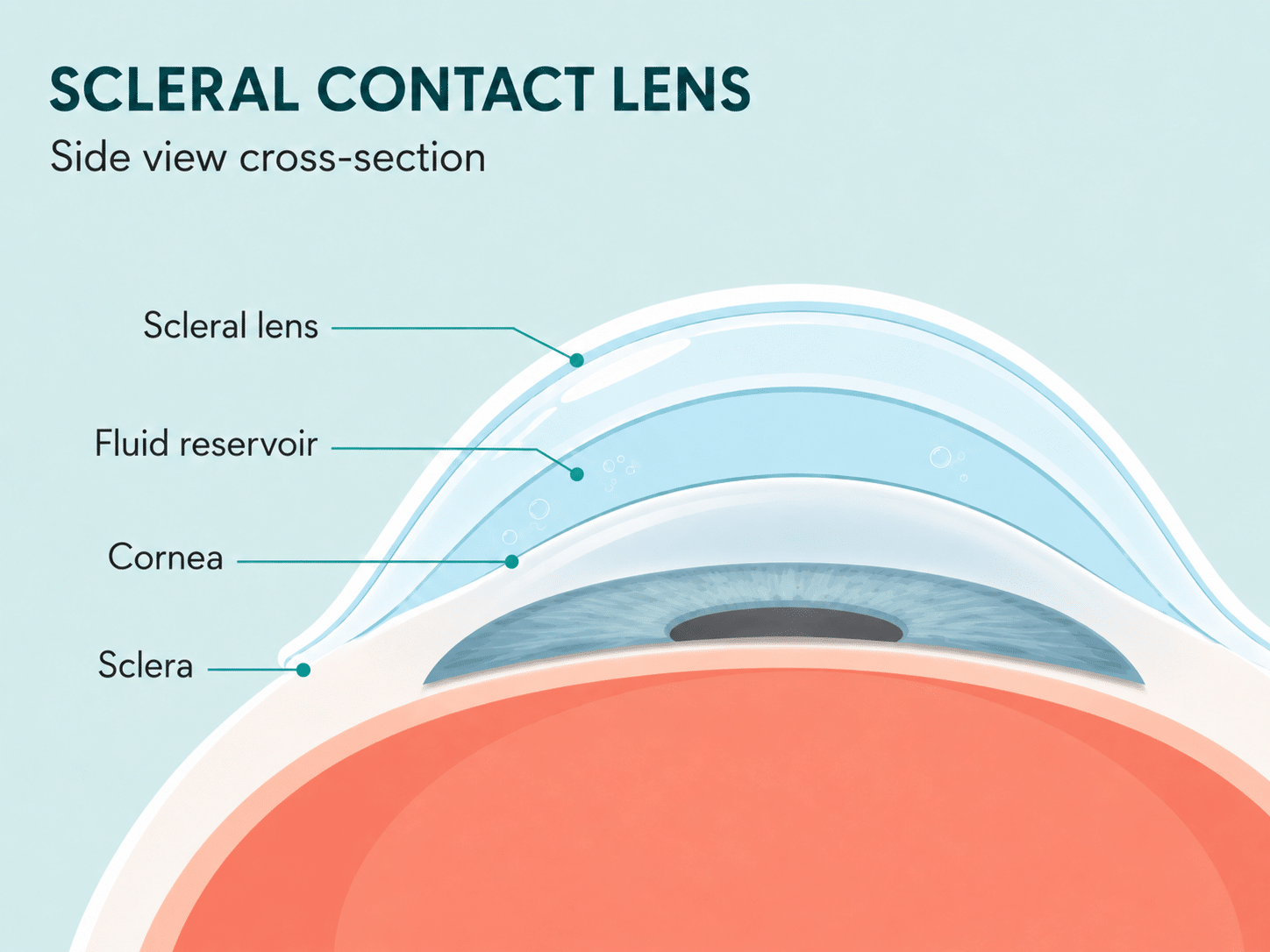
These often take more than a single appointment to fit well, because getting them right matters more than getting them fast. For many people who had written off contacts, it is worth one more conversation before they give up for good.
What a specialty evaluation includes.
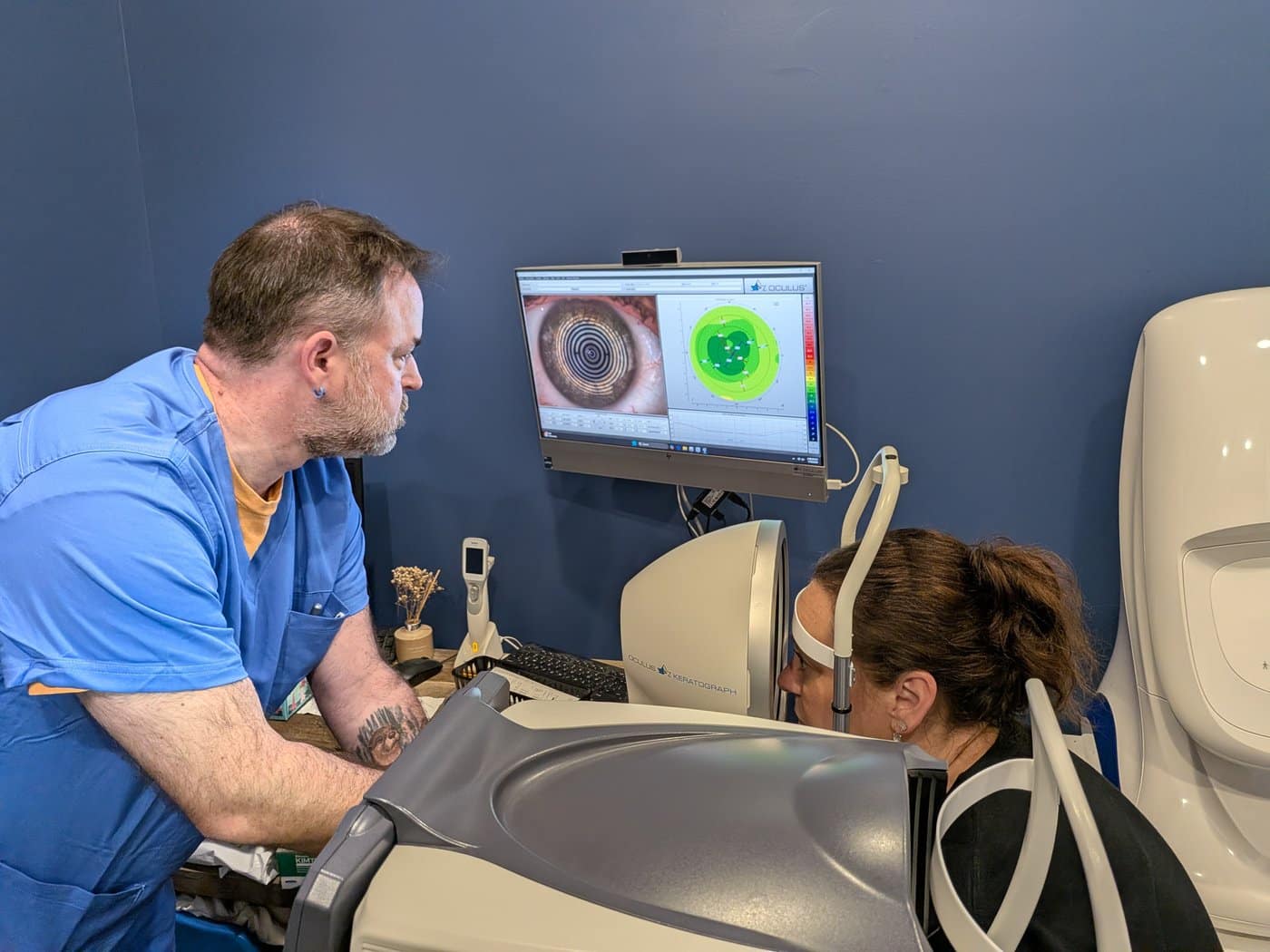
It starts with the shape of your eye, not just your prescription. We use corneal topography to map the surface in detail, and we weigh that map alongside your prescription, your tear film, and how your eyes have handled lenses before to choose whether a custom soft, gas-permeable, or scleral design is the right starting point. That measurement step is what separates a specialty fit from a routine contact lens check.
From there we work with trial lenses. You wear a diagnostic lens, we assess how it sits and how you see, and we refine from there. For sclerals and other custom designs, it is normal for this to take a few visits to dial in. We do not cut the process short to save a trip. See what to expect at a contact lens exam →
If your contacts have never felt right, it is worth one conversation before you give up on them. A specialty evaluation can show you what is realistic for your eyes.
Book a specialty contact lens evaluationOr call us at (614) 933-0575. We see patients from New Albany, Gahanna, Westerville, and across Central Ohio.
Common questions.
Q.01 Why do my contacts dry out every afternoon?
Often because the lens is not matched to your eye’s surface or tear film. A custom or scleral lens can often improve the afternoon dryness, though dryness has several causes and sometimes needs more than a lens change.
Q.02 Can I wear contacts if I have keratoconus or astigmatism?
Frequently, yes, with the right lens. Regular astigmatism is often handled well by toric soft lenses. Keratoconus and other irregular corneas usually need a gas-permeable or scleral design instead of standard soft contacts.
Q.03 I had LASIK years ago. Can I still wear contacts?
Often yes, but it may take a specialty lens designed for post-surgical eyes rather than an off-the-shelf one.
Q.04 Is “hard to fit” a dead end?
Usually not. It often means standard lenses have not worked, and a specialty evaluation can determine whether a different lens design is a realistic option. It is a common reason patients are referred to us.
Q.05 Does insurance cover specialty contacts?
It depends on your plan. Some vision plans through VSP or EyeMed include a medically necessary contact lens benefit. Whether it applies comes down to your specific plan and whether your case qualifies. We verify what we can in advance and confirm qualification together at the evaluation.