Ortho-K for Kids in New Albany, Ohio.
Rigid contact lenses worn only at night that reshape your child's cornea while they sleep. Your child wakes up able to see clearly all day, with no daytime glasses or contacts. For kids whose nearsightedness is progressing, ortho-k also slows the underlying eye growth that drives myopia. Two benefits in one nightly habit.
We've been fitting ortho-k since COVE opened. Dr. Karres has years of clinical experience designing and fitting ortho-k lenses for kids in Central Ohio, and COVE's pediatric eyecare depth wraps around every fit. For kids, ortho-k is one of the most effective tools we have for slowing myopia, and one of the few that gives a child glasses-and-contact-free daytime vision.
- What ortho-k actually does for a child's eye01
- How ortho-k slows myopia progression02
- Is my child a good candidate?03
- What night one through night thirty looks like04
- Safety, follow-up, and what happens if the fit changes05
- What ortho-k costs at COVE06
- How the fit works, step by step07
- Ortho-K vs Stellest vs MiSight, for kids08
- Common questions09

What ortho-k actually does for a child's eye.
Ortho-k lenses are rigid, gas-permeable contacts your child wears only at night. While they sleep, the lens applies a precise, gentle pressure that temporarily flattens the central cornea, the clear dome at the front of the eye that does most of the focusing work. By morning, the new shape holds. Your child removes the lenses, opens their eyes, and sees clearly without glasses or daytime contacts.
For most kids, one night of wear gives 16 to 24 hours of clear vision. The effect is temporary, which means if your child stops wearing the lenses, the cornea returns to its original shape. That's a feature, not a bug. It's why ortho-k is considered non-surgical and reversible.
How ortho-k slows myopia progression.
Nearsightedness in kids isn't only an inconvenience. Each time the prescription gets stronger, the eye is physically getting longer. The longer the eye becomes, the higher the lifetime risk of retinal detachment, maculopathy, glaucoma, and earlier cataracts. The goal of myopia management isn't to give your child sharper vision today. It's to slow that eye-length change.
Ortho-k slows axial elongation in two ways. The reshaped cornea sharpens central vision, and the lens design also changes how light focuses on the peripheral retina, which appears to be one of the biological signals that tells the eye to keep growing. By interrupting that signal nightly, ortho-k slows the rate of progression in many kids.
We can't stop myopia. We can slow it. Ortho-k is one of the strongest tools we have for that goal, especially for kids who don't want daytime contacts or glasses.
Is my child a good candidate?
Ortho-k works best for:
- Kids whose prescriptions are stable and very mild, where the slowing benefit is marginal
- Kids with significant dry eye, lid disease, or other corneal issues that need treatment first
- Families who can't commit to the nightly routine or to the follow-up schedule
The no-charge evaluation at COVE is the right place to find out which group your child is in. We map the cornea with topography, look at the prescription and eye health, and tell you honestly whether ortho-k is the right call.
What night one through night thirty looks like.
The reshaping happens night by night. Vision is often noticeably clearer after the first night, fully stable by the one-month mark.
First lens in.
The lens goes in just before bed. Most kids feel awareness of the lens for the first minute or two, then forget it's there. Sleep is normal. In the morning, the lens comes out. Daytime vision is often noticeably clearer right away, though usually not yet fully sharp.
Vision improves night by night.
By the end of the first week, most kids are seeing 20/20 or close to it through most of the day. The lens itself feels less and less noticeable each night.
Vision stabilizes.
By the one-month mark, the cornea has settled into its new shape and clear vision lasts the full day. We see kids at 1 week, 1 month, 3 months, and 6 months during the initial year to confirm everything is on track.
The ongoing routine.
One lens in each eye, every night, every night. Skipping nights doesn't carry over. The reshaping is maintained only as long as the lenses are worn.
Safety, follow-up, and what happens if the fit changes.
Ortho-k has been used safely in children for decades. The main safety consideration is the same as with any contact lens worn against the eye: proper cleaning, proper case hygiene, and not wearing the lens when something is wrong (red eye, pain, blurry vision that wasn't there yesterday). We walk through all of this in the dispensing visit, and we'd rather a parent call us with a question than wait it out.
One practical advantage of the overnight routine: the lens is handled at home, in a controlled setting, with a parent nearby, rather than being inserted and removed on the go throughout the day. Good hygiene habits are easier to keep when the routine happens in the same place every night, and we check the fit and the health of the eye at every follow-up visit.
1 week, 1 month, 3 months, 6 months.
In year one. After that, twice a year. All of these visits are part of the first-year ortho-k fee.
We remake the lenses.
Kids' eyes grow. If your child's prescription changes enough that the existing lenses don't deliver clear all-day vision, we remake them until the fit is right. That commitment is part of the fitting fee, not a separate charge.
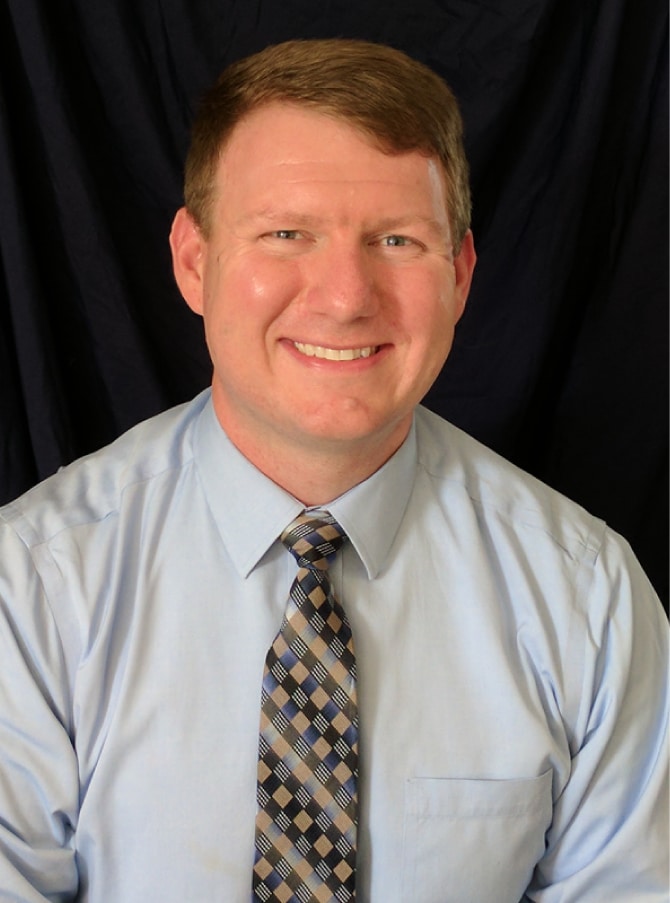
New Albany High School graduate and OSU College of Optometry graduate. Years of clinical experience designing and fitting ortho-k lenses for kids in Central Ohio.
OSU College of Optometry graduate. InfantSEE provider and Realeyes vision educator, with vision education delivered to more than 13,000 Ohio students.
What ortho-k costs at COVE.
The first-year ortho-k fee covers the evaluation, corneal topography, custom lens design, the lenses themselves, the dispensing and training appointment, and all year-one follow-up visits. It also covers remakes if the fit changes as your child's eyes grow.
We can't quote an exact number on the website because the right answer depends on your child's prescription, the corneal shape, and which design we end up using. The no-charge evaluation is where we give you the real number. We'll also tell you whether ortho-k is the right call before you commit to anything.
Some vision insurance plans contribute toward specialty contact lens fits. We'll verify your specific plan in advance.
- No-charge evaluation and corneal topography
- Custom lens design from your child's corneal map
- The lenses themselves, plus dispensing and insertion/removal training
- All year-one follow-up visits (1 week, 1 month, 3 months, 6 months)
- Lens remakes if your child's prescription changes mid-year
Ask about COVE Plus.
COVE Plus is our in-house flat-pricing plan. Specialty contact lens services are offered at a flat rate as part of the plan.
How the fit works, step by step.
Five steps from the first consultation to the ongoing nightly routine.
-
01
The no-charge evaluation.
We map the cornea with topography, review the prescription, and answer your questions. No commitment, no charge. If ortho-k isn't the right answer for your child, we'll tell you and point you toward what is. If it's been about six months or more since your child's last eye exam, a current exam (a normal billed visit) may need to come first.
-
02
Custom lens design.
Using the topography data, the doctor designs the lenses to your child's corneal shape. We use WAVE-designed lenses for ortho-k fits when the corneal shape calls for it. The lab makes the lenses to spec, usually in about a week.
-
03
Dispensing and training.
We meet with your child and walk through insertion, removal, and cleaning. Most kids get the routine within a couple of practice rounds. We send you home with practice lenses, a case, solution, and instructions.
-
04
First night, then follow-up.
Your child wears the lenses that night. We see them at 1 week, 1 month, 3 months, and 6 months in year one to confirm the fit and to check eye health.
-
05
Ongoing.
Once the routine is established, your child wears the lenses every night and sees us twice a year. The lenses are typically replaced annually.
Ortho-K vs Stellest vs MiSight, for kids.
COVE offers three evidence-based options for slowing myopia in kids. None is the right answer for every child. Here's how we think about it:
Stellest (Essilor)
Daytime glasses that slow axial elongation. The easiest behavior change for kids who already wear glasses. No new routine. Strong evidence base. Doesn't help if the kid takes the glasses off for sports or screens.
MiSight 1-day (CooperVision)
FDA-approved for myopia control. Good for kids who want contact lens freedom during the day, are responsible enough to handle daily insertion and removal, and don't want overnight wear. Worn during the day, discarded each night.
Ortho-K
Worn only overnight. No daytime glasses, no daytime contacts, no need to remember a lens at school. Best fit for sports kids (especially water sports), kids who want full glasses-and-contact-free days, and parents who like that the lenses live at home.
We talk through all three at the consultation. The right answer depends on the child's prescription, their schedule, their sports, their maturity around responsibility, and the family's preferences.
Your child goes to bed nearsighted and wakes up seeing clearly. That's the whole point of ortho-k.
We design every set of lenses from your child's own corneal map, follow the same 1-week, 1-month, 3-month, and 6-month schedule for every family, and remake the lenses if their eyes change, all part of the first-year fee. If ortho-k isn't the right fit for your child, we'll say so and point you toward Stellest or MiSight instead.
More than 1,100 five-star Google reviews, and the ortho-k families in them tell the story themselves: kids with strong prescriptions seeing 20/20 all day without glasses, and families who moved out of state and still come back every year for their children’s ortho-k care.
“couldn’t be more thrilled” · “worth the drive”
Read the reviews for yourself on Google →Common questions.
Q.01 At what age can kids start ortho-k? +
There's no hard minimum. We've fit kids as young as 7. The deciding factor is the child's ability to handle a nightly routine with parental support, not a birthday.
Q.02 Does my child still need daytime glasses with ortho-k? +
Not once the fit is dialed in. During the first week or two, while the cornea is settling, some kids wear glasses or daytime contacts for part of the day. After that, ortho-k is the whole routine.
Q.03 Is ortho-k safe to wear every night? +
Yes, when worn and cleaned correctly. We cover the routine in the dispensing visit and would rather you call with a question than wait it out.
Q.04 What if my child's prescription keeps changing? +
Kids' eyes grow. If the existing lenses stop delivering clear all-day vision, we remake them until the fit is right. That's part of the fitting fee.
Q.05 Can my child play sports in ortho-k? +
Yes. That's actually one of the strongest reasons families choose it. No goggles needed for swimming, no contacts to lose in a gymnastics meet, no glasses to break.
Q.06 What happens if my child stops wearing the lenses? +
The cornea returns to its original shape, usually within a few weeks. Vision goes back to where it was before ortho-k. There's no permanent change.
Q.07 How is ortho-k different from LASIK? +
LASIK is a one-time surgical procedure that permanently reshapes the cornea. Ortho-k is a nightly contact lens routine that temporarily reshapes the cornea. LASIK is for adults whose prescription has stopped changing. Ortho-k can be used with growing kids whose prescription is still moving.
Q.08 We don't have vision insurance. Can we still do ortho-k? +
Yes. Ask about COVE Plus, our flat-pricing plan for families without vision insurance.
No-charge ortho-k evaluation for your child.
Thirty minutes, corneal topography, an honest answer on whether ortho-k is the right fit. No commitment. If it's not the right call, we'll tell you what is.